
"How to Start a Clothing Brand: A Manufacturer's Guide"
Updated: Jul 30
Starting a clothing brand is equal parts creative vision and operational puzzle. The vision usually comes easily — the aesthetic, the audience, the story you want to tell. The puzzle is everything that happens between "I have a design" and "I have a product I can sell." That gap is where most first-time founders get stuck, and it's the part of the process we see up close every day, because it's the part where a manufacturer gets involved.
This guide walks through that gap — the practical, sequential steps of turning a clothing brand idea into a real, sellable product line — from someone who sits on the production side of that conversation.
1. Define Your Product Before You Define Your Brand
It's tempting to start with a logo, a brand name, and an Instagram aesthetic. Resist that order. Before any of that, nail down:
What exactly are you making? Not "sustainable streetwear" — but "a 5-piece organic cotton essentials capsule: two tees, a crewneck, a hoodie, and joggers."
Who is it for, specifically? A tighter customer definition makes every downstream decision — fabric, price point, sizing — easier.
What price point are you targeting, and what margin do you need? This determines your manufacturing budget before you've spoken to a single factory.
A specific, narrow starting product line is easier to manufacture well, market clearly, and scale later. Most successful brands started with far fewer SKUs than founders initially plan for.
2. Understand the Manufacturing Path Options
New founders often don't realize there are several distinct paths to getting a garment made, each with different cost, control, and speed trade-offs:
Private label: You select from a manufacturer's existing designs/blanks and customize branding (labels, packaging, minor tweaks). Fastest and cheapest way to launch, lower differentiation.
Custom manufacturing: You bring your own designs, tech packs, and fabric choices, and the manufacturer builds them from scratch. More control and differentiation, higher cost and longer lead time.
White label: Similar to private label but typically involves rebranding an existing product with no modification at all.
Most new brands start with a hybrid: private label basics to generate early cash flow, alongside a smaller custom-developed hero piece that carries the brand's identity.
3. Build a Tech Pack (Even a Rough One)
A tech pack is the technical blueprint of your garment — measurements, materials, construction details, trims, and colorways — that a factory uses to produce a sample and, eventually, bulk production. It's the single most important document in this process, and the biggest source of miscommunication when it's missing or incomplete.
You don't need professional software to start. A tech pack can begin as:
A flat sketch (front and back) with labeled measurements
A fabric swatch or reference
A clear note on fit, stitching, and any special details (a chest pocket, a specific hem finish, a print placement)
Manufacturers can help refine a rough tech pack into a production-ready one, but starting with nothing makes every quote and every sample round slower and less accurate.
4. Source Fabric Early — It Affects Everything Else
Fabric choice determines your cost, your minimum order quantity (MOQ), your lead time, and often your factory options, since not every manufacturer works with every fiber or finish. Decide early whether you're prioritizing:
Sustainability credentials (organic, GOTS/GRS-certified, recycled fibers) — increasingly expected by retail buyers and conscious consumers, but usually carries a fabric MOQ and cost premium
Cost efficiency — conventional fibers, wider factory choice, lower MOQs
Performance or technical properties — moisture-wicking, stretch, technical finishes for activewear or swimwear
A manufacturer with in-house or closely partnered fabric sourcing can shorten this step significantly, since you're not coordinating a separate fabric supplier and garment factory independently.
5. Get Real About Minimum Order Quantities
MOQ is the number that kills more first-time brand plans than any other factor.
Understand that MOQ can apply at multiple levels:
Fabric MOQ — the minimum yardage a mill will produce or sell, often the real bottleneck (sometimes higher than the garment MOQ itself)
Garment MOQ — the minimum units per style, sometimes per colorway, a factory will produce
Per-order MOQ vs per-style MOQ — some manufacturers allow you to mix styles to hit a combined minimum, which matters a lot for a small first collection
Ask any manufacturer you're evaluating to break this down explicitly rather than quoting a single number — it changes your first-order budget dramatically.
6. Vet Manufacturers Like You're Hiring a Long-Term Partner
Your first factory relationship shapes your brand's quality, reliability, and margins for years, not just for one order. When evaluating manufacturers, ask about:
Certifications — GOTS, GRS, ISO, and any compliance/social audit certifications relevant to your target retail markets (UK and EU retailers in particular increasingly require documented compliance)
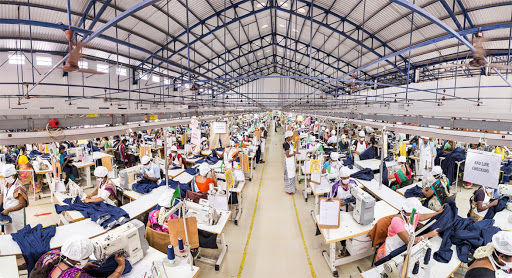
Vertical integration — a manufacturer that handles fabric, cutting, sewing, and finishing in-house typically offers more consistency and fewer handoff delays than one outsourcing each stage
Sample turnaround and communication — how a factory handles your first sample request is a strong predictor of how they'll handle production issues later
References or existing client brands — a manufacturer with an established client base is a signal of reliability, particularly for buying agents and sourcing agents evaluating a factory on a brand's behalf
7. Plan Your Costing and Pricing Before You Order Samples
Work backward from retail price using a standard apparel markup structure (typically 2.5–3x the manufacturing cost for wholesale, and similar multiples again for retail, depending on your channel). Factor in:
Manufacturing cost per unit (fabric + trims + labor + factory margin)
Freight and duties, especially if manufacturing overseas and selling in the US, UK, EU, Canada, or Australia
Sampling costs (usually absorbed as a one-time development cost, sometimes credited against your first bulk order)
Underestimating landed cost (product + freight + duty) is one of the most common reasons first collections are priced too low to sustain the business.
8. Start Small, Then Scale the Relationship
Your first order doesn't need to be your forever order size. Many manufacturers are willing to work with a smaller first production run to prove the relationship on both sides, then scale MOQs and pricing tiers down as the partnership grows and volumes increase. If a factory insists on a large first commitment with no flexibility, that's worth weighing carefully against factories willing to grow with you.
The Bottom Line
Starting a clothing brand is a sequence, not a single leap: define a focused product, choose your manufacturing path, build a real tech pack, lock down fabric and MOQ expectations, and vet your factory as a long-term partner rather than a one-time vendor. Founders who treat these as sequential decisions — rather than trying to solve branding, sourcing, and production all at once — tend to launch faster and with fewer costly surprises.
---
Attuendo is a vertically integrated, GOTS/GRS-certified apparel and home furnishing manufacturer working with emerging and established brands worldwide, with low MOQs and full support from tech pack development through bulk production. Get in touch for a quote or to talk through your first collection.


Comments