
Low MOQ Clothing Manufacturers: What Startups Need to Know
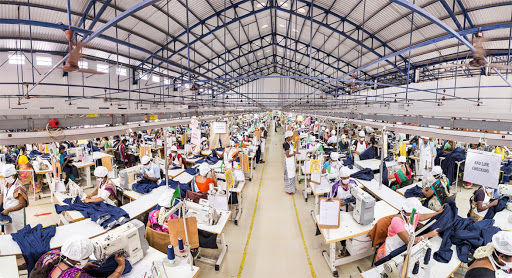
If you've started researching how to manufacture a clothing line, you've probably run into the same wall almost every new founder hits: minimum order quantities (MoQ). A factory that looks perfect in every other way — right specialty, right certifications, right price point — turns out to require 1,000 units per style, per colorway. For a startup testing a first collection, that's not just expensive, it's risky.
This is where low MOQ manufacturing comes in — and understanding how it actually works, rather than just searching for the lowest number, will save you a lot of wasted conversations with factories that aren't the right fit.
What "Low MOQ Clothing Manufacturer" Actually Means (It's Not One Number)
MOQ gets talked about as if it's a single figure, but it usually applies at several different levels, and each one affects your first order differently:
Fabric MOQ — the minimum yardage a mill will cut or dye for you. This is often the real constraint, and it can be higher than the garment MOQ itself, especially for custom colors or specialty fabrics.
Garment MOQ per style — the minimum units a factory will produce for one design.
Garment MOQ per colorway — some factories set MOQ per style, but require additional minimums for each color variation.
Total order MOQ — some manufacturers let you combine multiple styles or colors to hit a combined minimum, which is far more workable for a small first collection than a per-style requirement.
When a manufacturer quotes "MOQ: 300 units," always ask which of these it refers to — it changes your budget and product plan substantially.
Why MOQs Exist in the First Place
MOQs aren't arbitrary — they reflect real production economics. Cutting fabric, setting up machines, and running a production line has fixed costs regardless of order size, so factories set minimums to keep per-unit costs viable. Fabric mills have similar constraints around dyeing and finishing runs. Understanding this helps in negotiations: a factory that's vertically integrated (handling fabric, cutting, and sewing in-house) often has more flexibility to offer lower MOQs than one relying on multiple outside suppliers, because there are fewer separate minimums stacking on top of each other.
Trade-Offs of Low MOQ Manufacturing
Low MOQ production makes it possible to launch without over-investing in inventory, but it typically comes with trade-offs worth planning for:
Higher per-unit cost — smaller runs mean less economy of scale, so unit cost is usually higher than a bulk order would achieve.
Fewer fabric and customization choices — some premium or highly specialized fabrics simply aren't available below a certain yardage.
Longer relative lead times in some cases — smaller orders can be scheduled around larger production runs at some factories, though this varies significantly by manufacturer.
More limited factory options — not every manufacturer offers low MOQ terms, so the pool of qualified factories is naturally smaller.
None of these are reasons to avoid low MOQ manufacturing — they're simply the trade-offs to weigh against the alternative (tying up capital in a large first order before you know how the product will sell).
How to Evaluate a Low MOQ Manufacturer
When comparing low MOQ options, go beyond the headline number:
Ask what the MOQ covers — per style, per color, or combinable across a small collection.
Ask about sample-to-bulk consistency — a good low MOQ manufacturer should produce your bulk order to the same quality as your approved sample, not a scaled-down version of their process.
Check certifications match your target retail markets — UK and EU buyers, in particular, increasingly expect documented compliance (GOTS, GRS, ISO) even from small first orders.
Ask if MOQ decreases as the relationship grows — many manufacturers offer lower entry MOQs to prove the partnership, then adjust pricing and minimums as order volume increases over time.
Clarify fabric MOQ separately from garment MOQ — this is the detail most often glossed over in an initial quote, and the one most likely to derail a budget later.
A Practical Starting Approach
For a first collection, many startups do best combining a small number of styles (3–6) using the same base fabric where possible, since this lets you meet fabric MOQ more easily while still offering some product variety. Save fabric-specific customization for a hero piece or two, and keep the rest of the collection on more standard, readily available materials. This approach keeps your first order size manageable without sacrificing the ability to differentiate your brand.
The Bottom Line
Low MOQ manufacturing exists to make it possible to launch a clothing brand without committing to inventory you can't yet justify — but the "MOQ" number on its own doesn't tell the full story. Understanding what it actually covers, why it exists, and how it interacts with fabric choice and factory structure will help you find a manufacturing partner that fits your first order today and can scale with you later.
Attuendo offers low MOQ, vertically integrated apparel and home furnishing manufacturing for emerging and established brands, with GOTS/GRS certification and full support from sampling through bulk production. Get in touch to discuss MOQ options for your first collection.


Comments